
A touching Indigenous tradition
Identity Etched in the Sky
Whereas nature endows birds with plumage to mark their species, humans are born naked. To assert their identity, Native Americans have chosen to borrow from the sky its most beautiful symbol: the feather, a true form of social and cultural expression.
Among the Kayapó, this art is passed down from generation to generation. From the moment of his birth, a boy inherits Nêkréx—a unique combination of feathers that will form his headdresses. These adornments, with their infinite shades and shapes, reveal his lineage and distinguish him within the group.
The Roriro-ri, a masterpiece of the Invisible
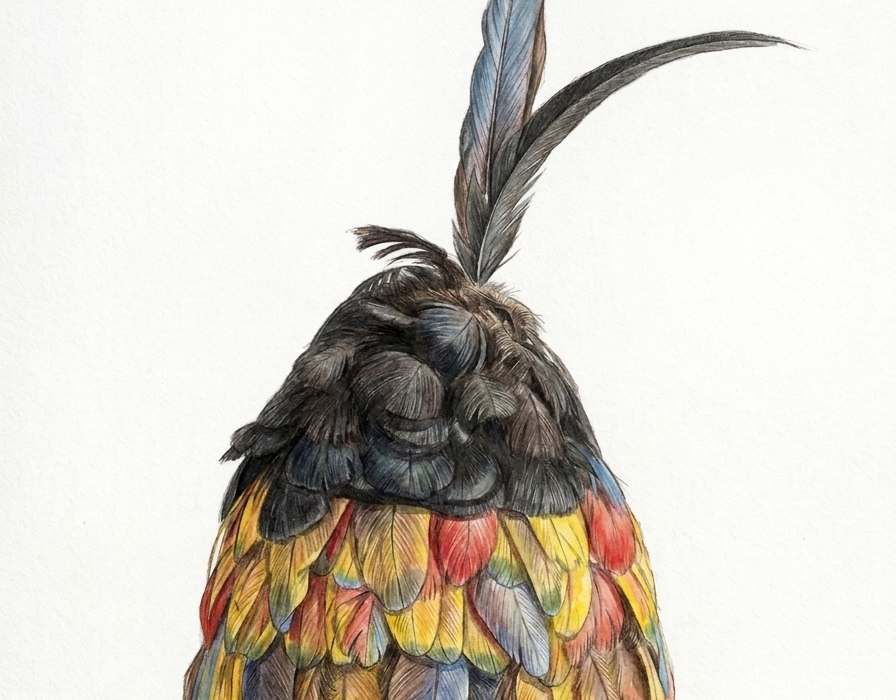
A symbol of this virtuosity, the roriro-ri is a traditional 20th-century headdress. Hocco feathers and those of red, blue, and hyacinth macaws rest upon a delicate structure of woven plant fibers. A complete work of art, worn during Mereremex rituals: that sacred, suspended moment when, literally, “men display their beauty.”
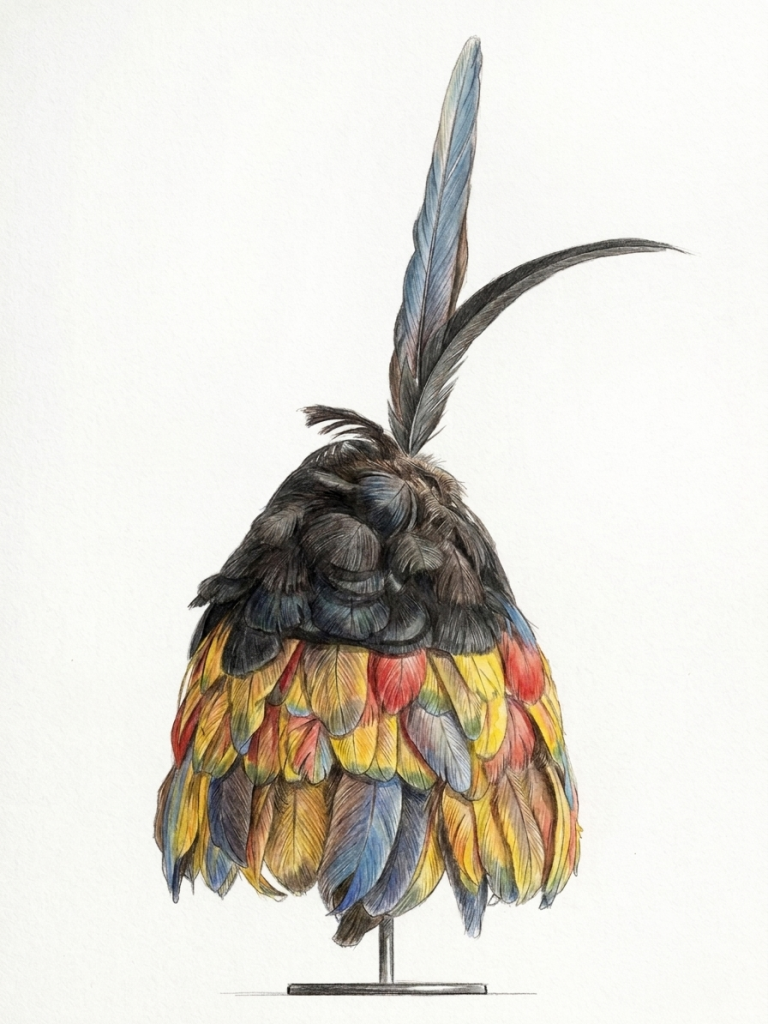
“I am moved by this tradition because, from the moment of birth, every newborn is given a meaningful identity—as a gesture of gratitude to nature. I see the choice of feathers and their colors as a symbol of the close bond that unites the child with their environment. It is a tribute to the beauty of nature, but also a way to instill, from the very first moments of life, respect and gratitude for the world around us.” — Amandine BONNEAU